Crime & Punishment: Vertigo Beyond the Dark Murder
There exist literary works that do not merely recount a story, but rather tear a breach in our perception of reality. Fyodor Dostoevsky’s Crime and Punishment is one such work. To reduce this masterpiece to a mere narrative of an assassination followed by a police manhunt would be a fundamental error. While the novel certainly deploys an implacable narrative drive, this structure is but the visible tip of a far more terrifying philosophical iceberg.
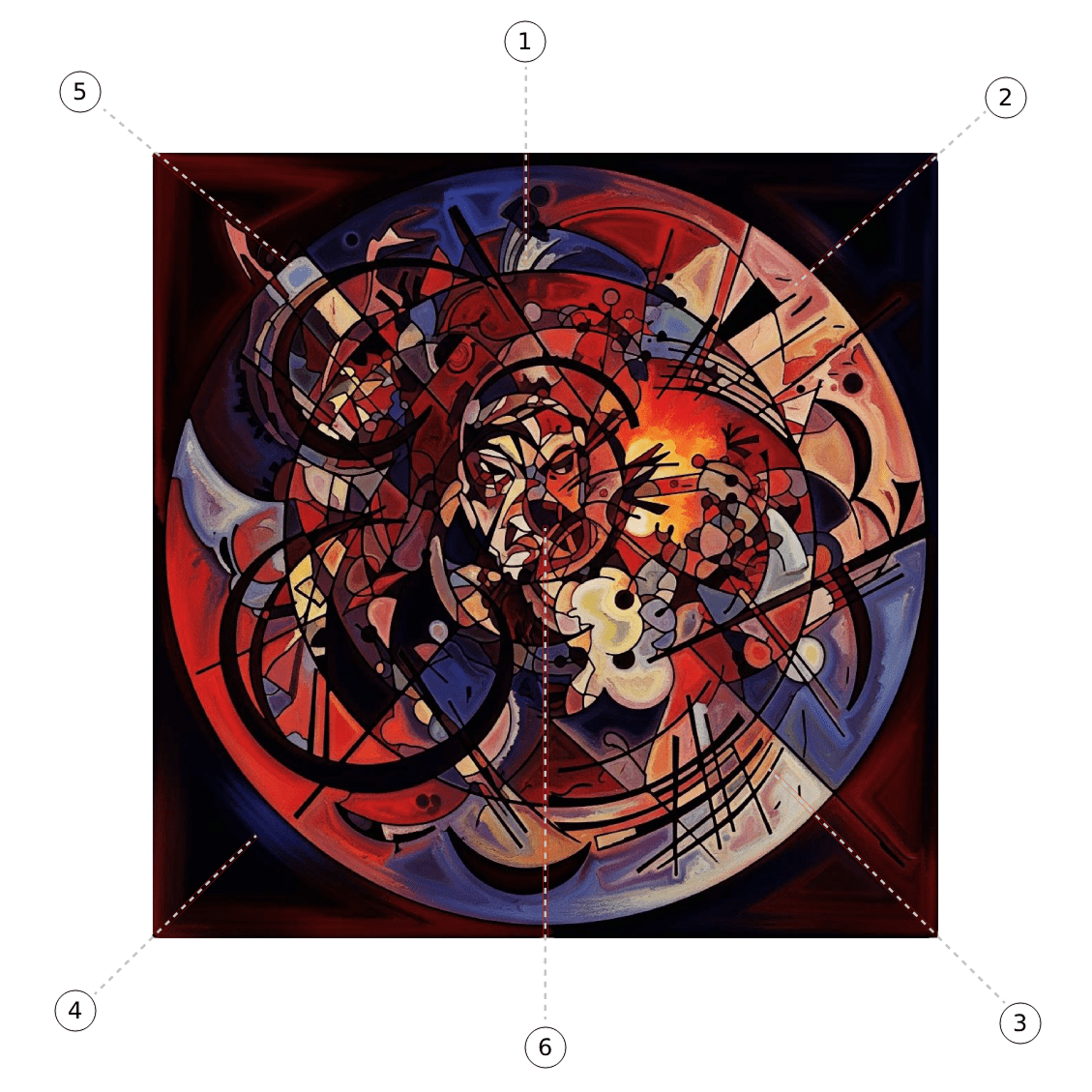
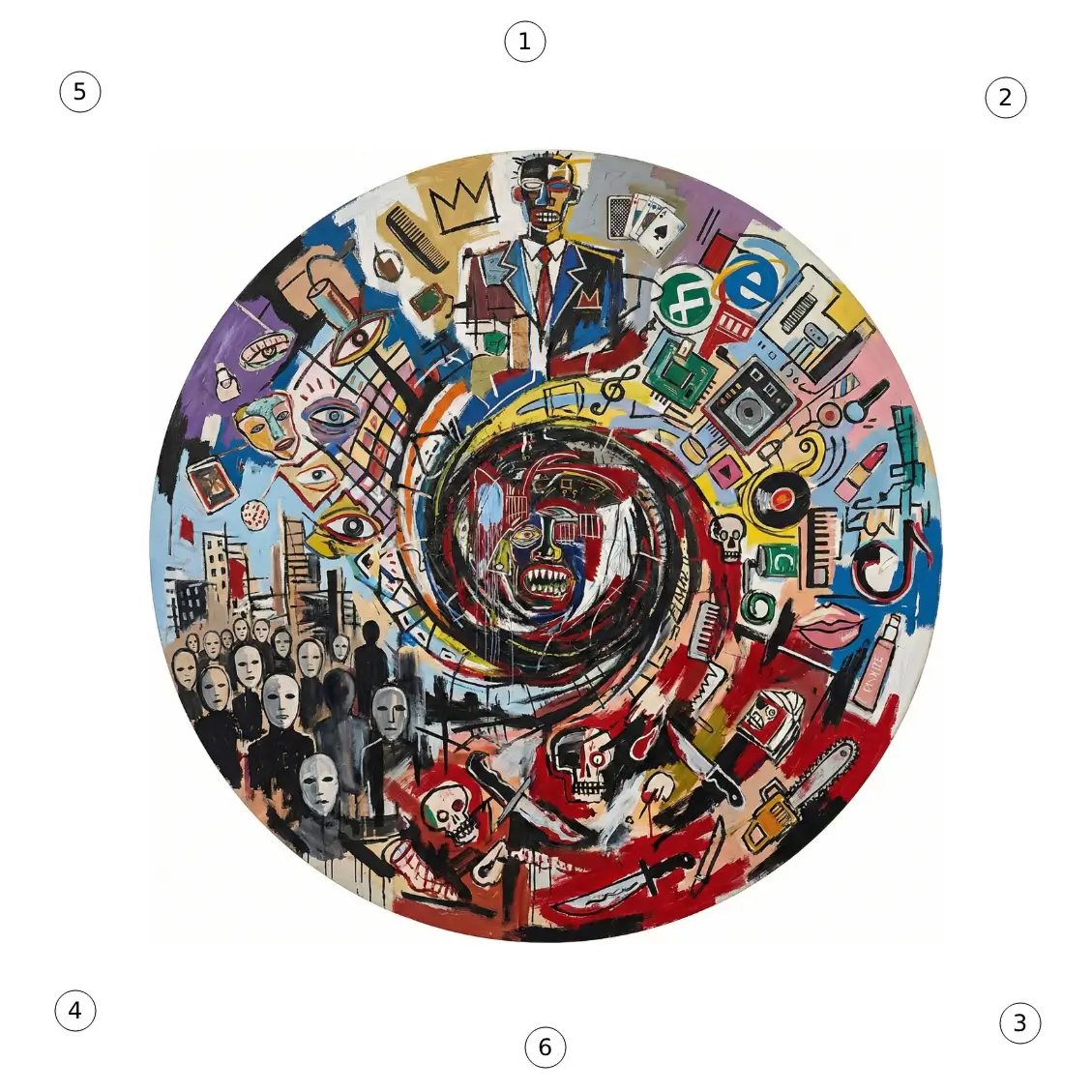
The uninitiated reader might view Rodion Raskolnikov’s journey as a tragedy in six acts—masterfully emotionalized upon our watch dial—a linear and predictable descent into hell:
- The Initial Hubris: The premeditated murder of the pawnbroker Alyona Ivanovna, motivated not by necessity, but by a warped ideology. Raskolnikov, dreaming himself a “Napoleon,” arrogates the right to eliminate a “louse” deemed harmful, for the alleged greater good of humanity.
- The Psychic Torment: The true “punishment” is not legal, but mental. An intense psychological turmoil, composed of paranoia and fever, depicting the clinical collapse of his mind.
- The Deleterious Setting: Immersion into an oppressive Saint Petersburg, a character in its own right, whose sordid alleys and stifling atmosphere mirror the protagonist’s moral decay.
- The Intellectual Joust: The confrontation with the examining magistrate Porfiry Petrovich, whose psychological acuity acts like acid upon Raskolnikov’s certainties, shattering his façade through cunning and maieutics.
- The Bankruptcy of Nihilism: A striking demonstration of the dangers of a rationality detached from universal morality; here, Dostoevsky denounces the revolutionary ideologies of his time.
- The Dolorous Path of Redemption: The gradual acceptance, under the luminous and sacrificial influence of Sonia Marmeladova, that the purification of the soul can only be achieved through extreme moral and physical suffering.
This constitutes the narrative skeleton. It is dense; it is potent. Yet, if one stops there, one misses the essence of Dostoevskian thought.
The Illusion of the Best of All Possible Worlds
The novel’s true depth—the one that should seize us with a sense of vertigo—resides in an interrogation that converges with the Book of Job and the theodicy of Leibniz.
Raskolnikov is not merely a murderer; he is a theorist who fails in his attempt to correct Creation. His fundamental error, his ultimate sin of pride, lies in the belief that he possesses the capacity to judge what is “good” or “bad” within the general economy of the universe.
By eliminating the old usurer, Raskolnikov sincerely believes he is performing an “excision of evil.” He believes he can improve the world by removing an element he deems noxious. It is here that the Leibnizian perspective intervenes: what if we were already living in “the best of all possible worlds”? Not a perfect world devoid of suffering, but a world where every element—even the vilest, even apparent evil—is a necessary component of an infinitely complex divine equilibrium that transcends our understanding.
Raskolnikov’s tragic illusion is to think he can substitute himself for this Providence. By wishing to “cleanse” reality, he merely introduces chaos—first within himself, then around him (leading to the death of the innocent Lizaveta).
The vertigo that seizes the reader—and Raskolnikov himself at the end—is born of this brutal realization: human reason, however sharp, is incapable of apprehending the totality of the cosmogonic design. Raskolnikov’s nihilism is not only immoral; it is metaphysically inept. He attempted to play dice with the universe, and the universe crushed him under the weight of his own arrogance.
The redemption offered by Sonia is therefore not a simple “moral solution.” It is an invitation to abandon the pretension of understanding or correcting the world through logic alone, and instead to embrace faith and compassion. It is to accept, like Job, that the mystery of existence includes suffering, and that salvation lies not in intellectual mastery, but in humility before the unfathomable complexity of the real.
Crime and Punishment is not the story of a man who killed and regrets it. It is the drama of a mind that believed it could redraw God’s blueprints, only to be shattered against the reality of its own finitude.[/vc_column_text][/vc_column][/vc_row]