Kandinsky: The Watchmaker of Chaos
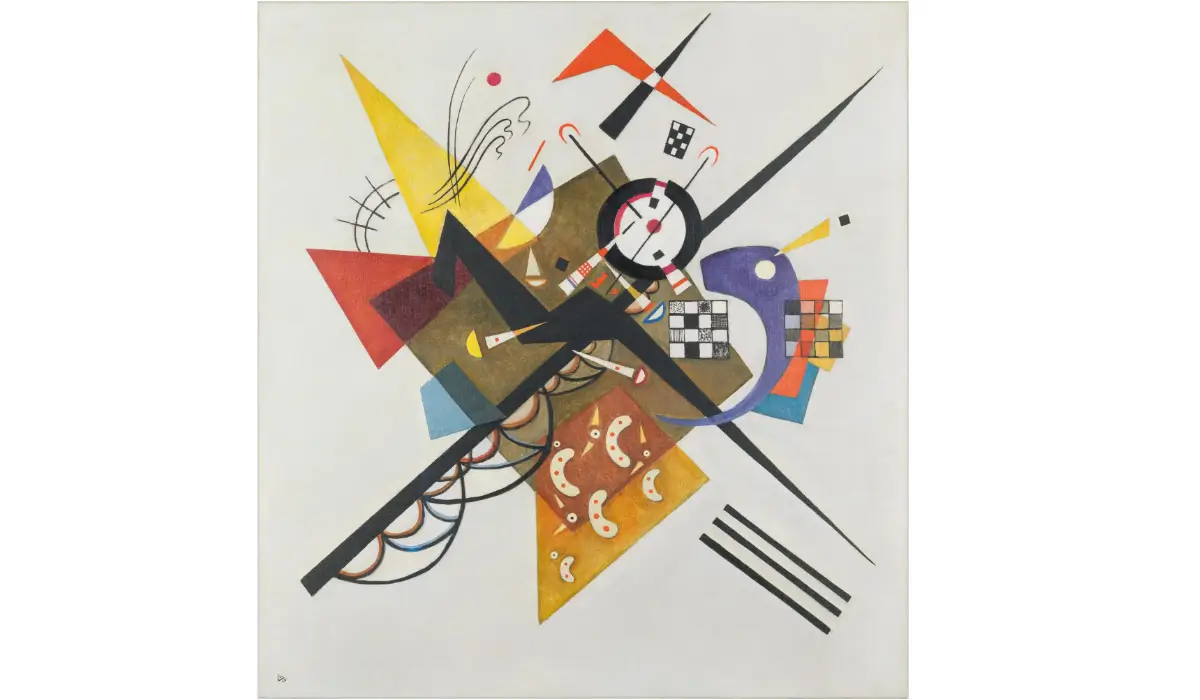
In his masterpiece On White (1923), Wassily Kandinsky does more than just paint shapes; he orchestrates a true celestial machinery. Painted during his years at the Bauhaus, this canvas serves as the theater for a fascinating struggle between mathematical rigor and the spiritual infinite.
The mechanics of time
Although the work belongs to the realm of pure abstraction, the eye perceives a strange kinship with horology. At the center, two large black beams cross like masterful clock hands. This intersection is no coincidence: it marks the point of tension where time seems to stand still. Surrounding them, circles and circular structures evoke invisible gears, while checkerboard patterns segment the space much like one would measure the passing of seconds.
Order vs. Silence
For Kandinsky, the white background is not a void, but a “silence full of possibilities.” It is upon this blank page of existence that sharp, piercing lines arrive to impose their will.
- The “hands” represent direction and human force.
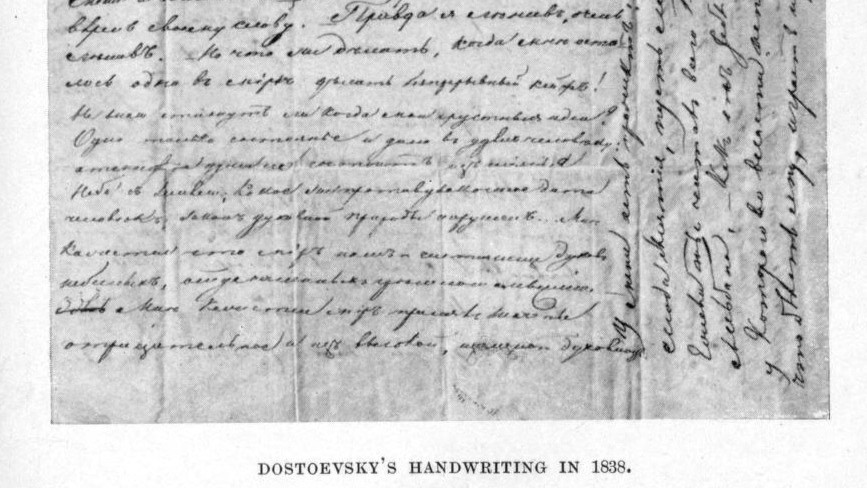
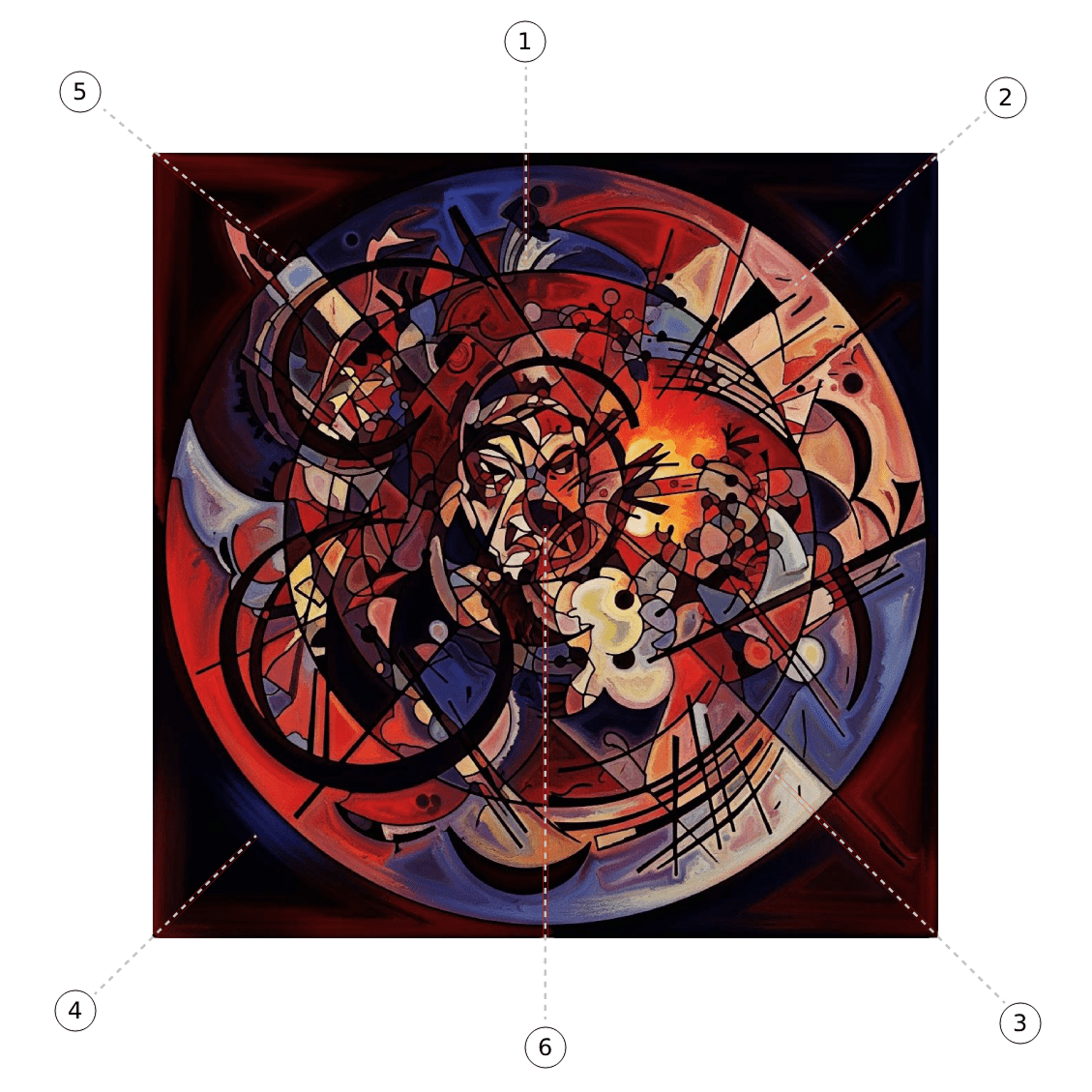
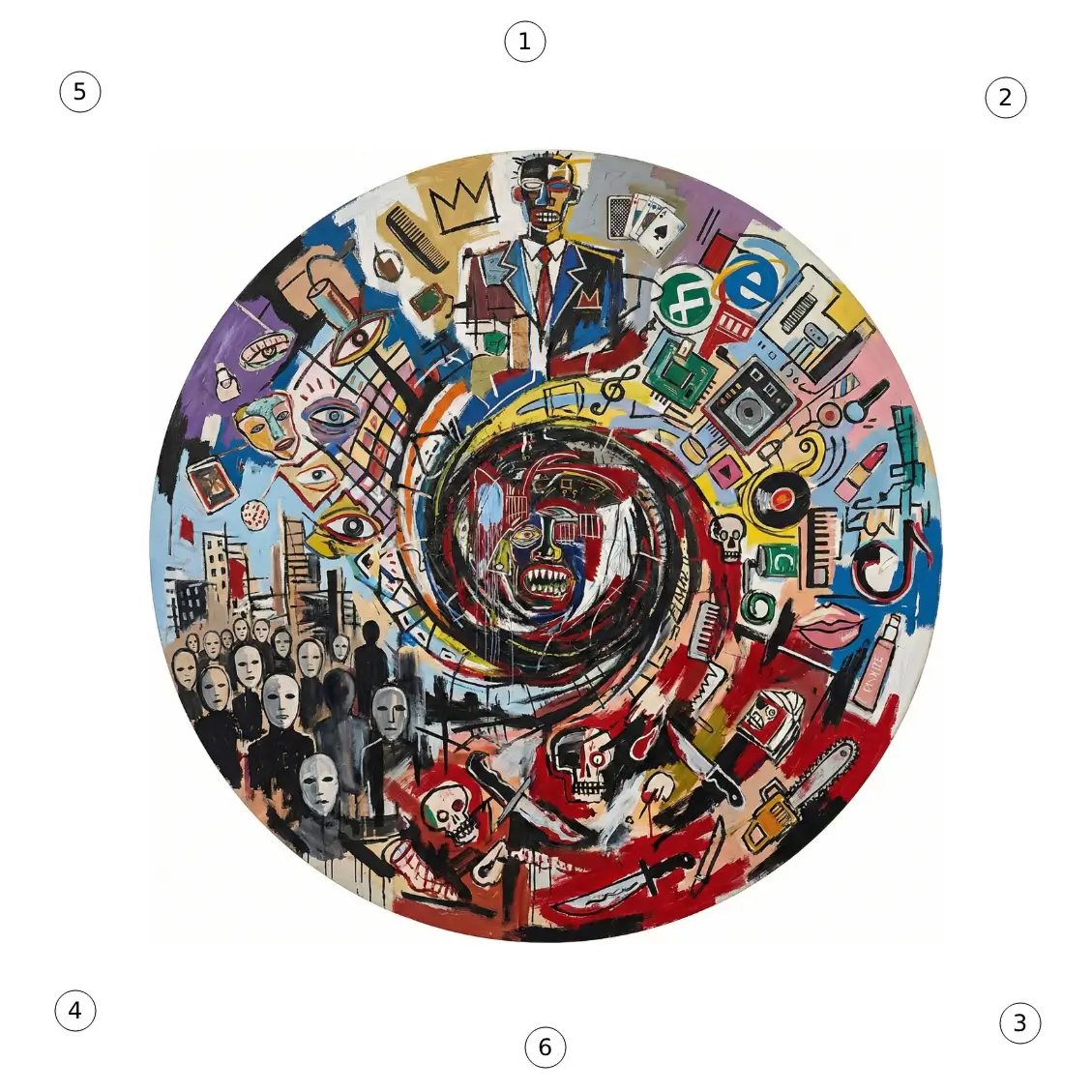
- The balance is precarious, echoing the psychological tension of Crime and Punishment: that precise moment when an idea shatters innocence.
A spiritual ascension
The diagonal composition draws the gaze upward. More than mere geometry, it is a quest for clarity. By structuring chaos through measurement, Kandinsky transforms the canvas into a spiritual machine, inviting us to transcend disorder in order to reach harmony.