Russian Soul on Wrist: Kandinsky Meets Dostoevsky
In our pursuit to create a timepiece that does not merely tell time, but rather recounts a narrative—one of redemption, the fall, and the light—we made an audacious artistic choice. To illustrate Crime and Punishment, that monument of psychological literature, we bypassed the classical realist painters. Instead, we selected the master of abstraction and pure emotion: Wassily Kandinsky.
Why this union between a 19th-century novelist and the father of abstract art? Here are the keys to our creative approach.
1. Two Visionaries, One “Russian Soul”
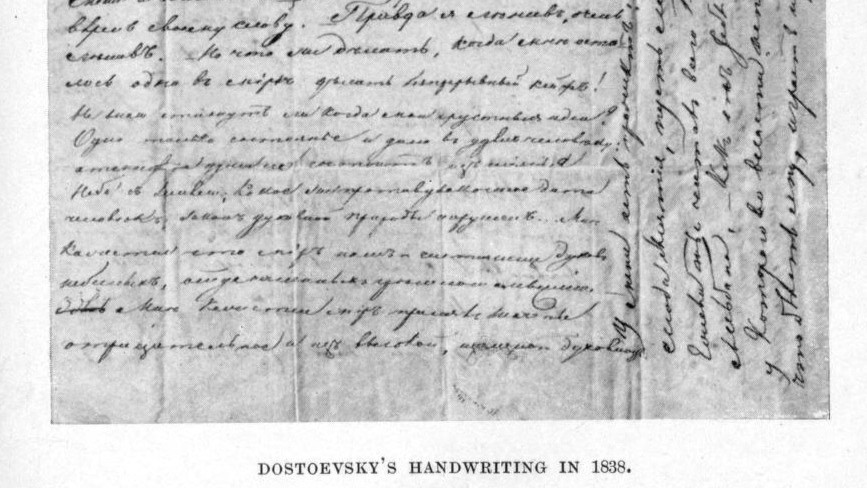
When Kandinsky was born in 1866, Dostoevsky was in his forties and at the peak of his literary powers (Crime and Punishment was published that very year). Kandinsky thus came of age in a Russian intellectual and spiritual landscape shaped by the existential questions Dostoevsky had posed. They are two sides of the same coin: one explored the depths of the human soul through words, while the other sought to express that same spirituality through color.
Choosing Kandinsky is a way of honoring the era, the atmosphere, and that tormented, mystical “Russian soul,” thereby creating a coherent historical continuity upon the dial of our watch.
2. The Gift of the Invisible: Harmonizing Colors and Emotions
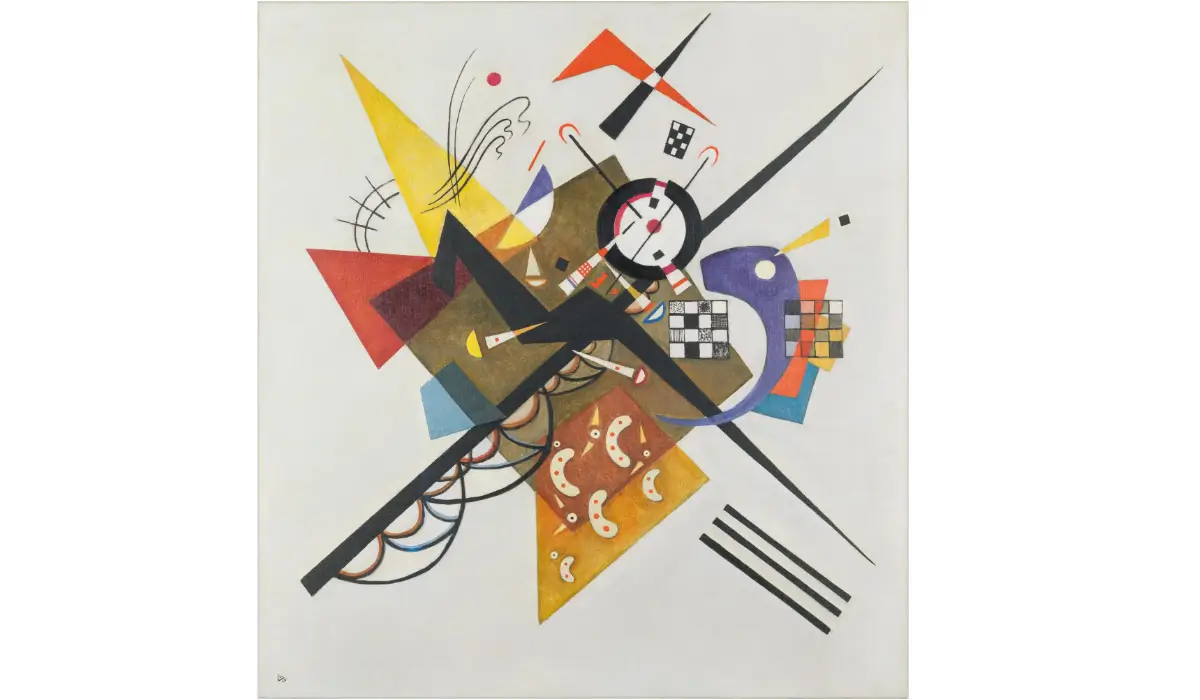
It is here that Kandinsky’s genius becomes indispensable. Kandinsky possessed a rare gift, a sensibility known as synesthesia. To him, colors were not simple visual ornaments, but vibrations that touched the soul directly, much like music.
He “heard” colors and “saw” sounds.
For Kandinsky, red is not merely a hue; it is a fanfare, a boiling point, an inner violence (perfect for illustrating the murder).
Blue calls to the infinite, to spirituality and calm (the perfect echo of redemption).
Yellow can be strident, aggressive, unbearable (mirroring Raskolnikov’s paranoid delirium).
3. Painting in the Language of Psychology
In Crime and Punishment, Dostoevsky is less interested in the events themselves than in the storm raging within his protagonist’s mind. Kandinsky achieves the exact same feat in painting. He does not paint a vase or a house; he paints fear, joy, tension, and chaos.
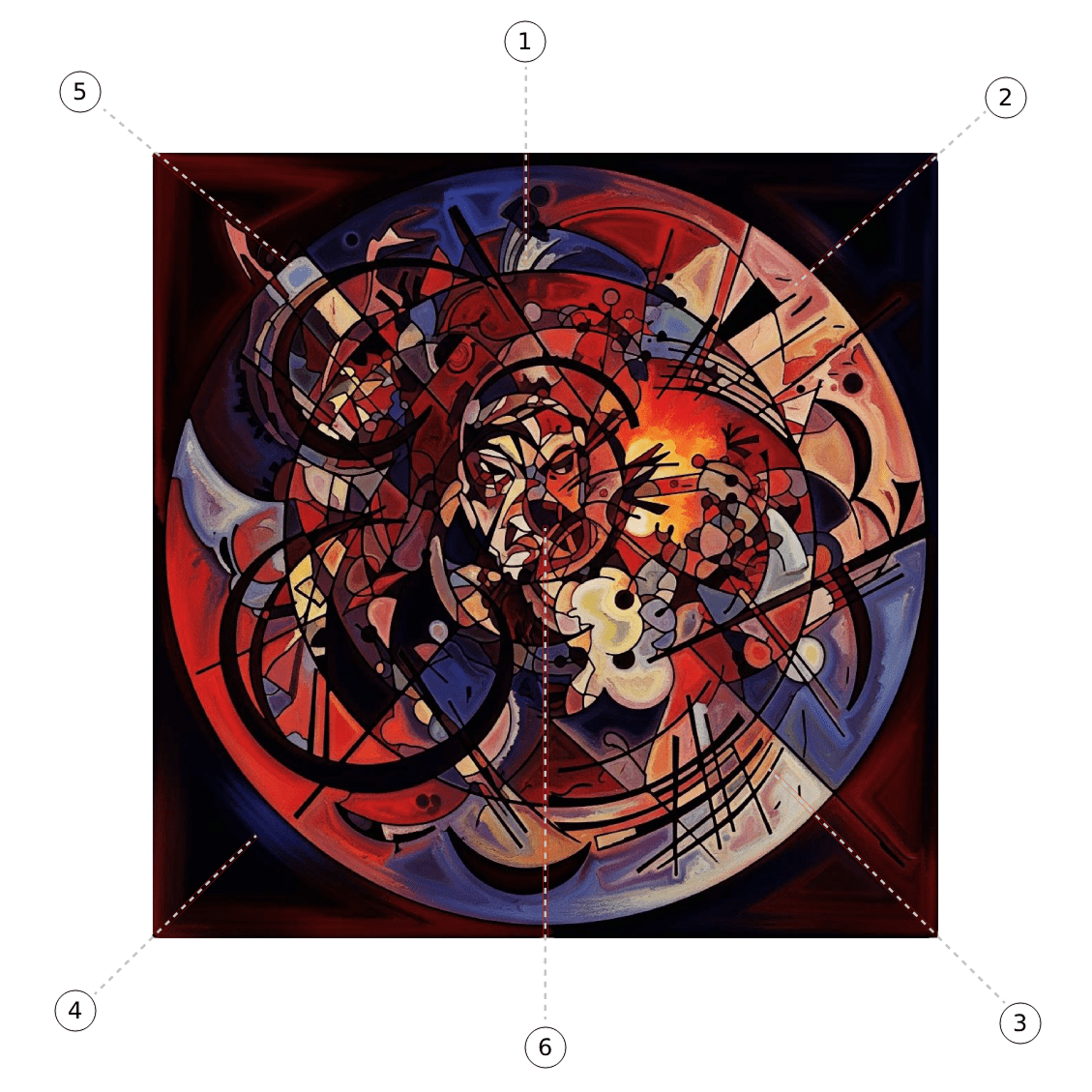
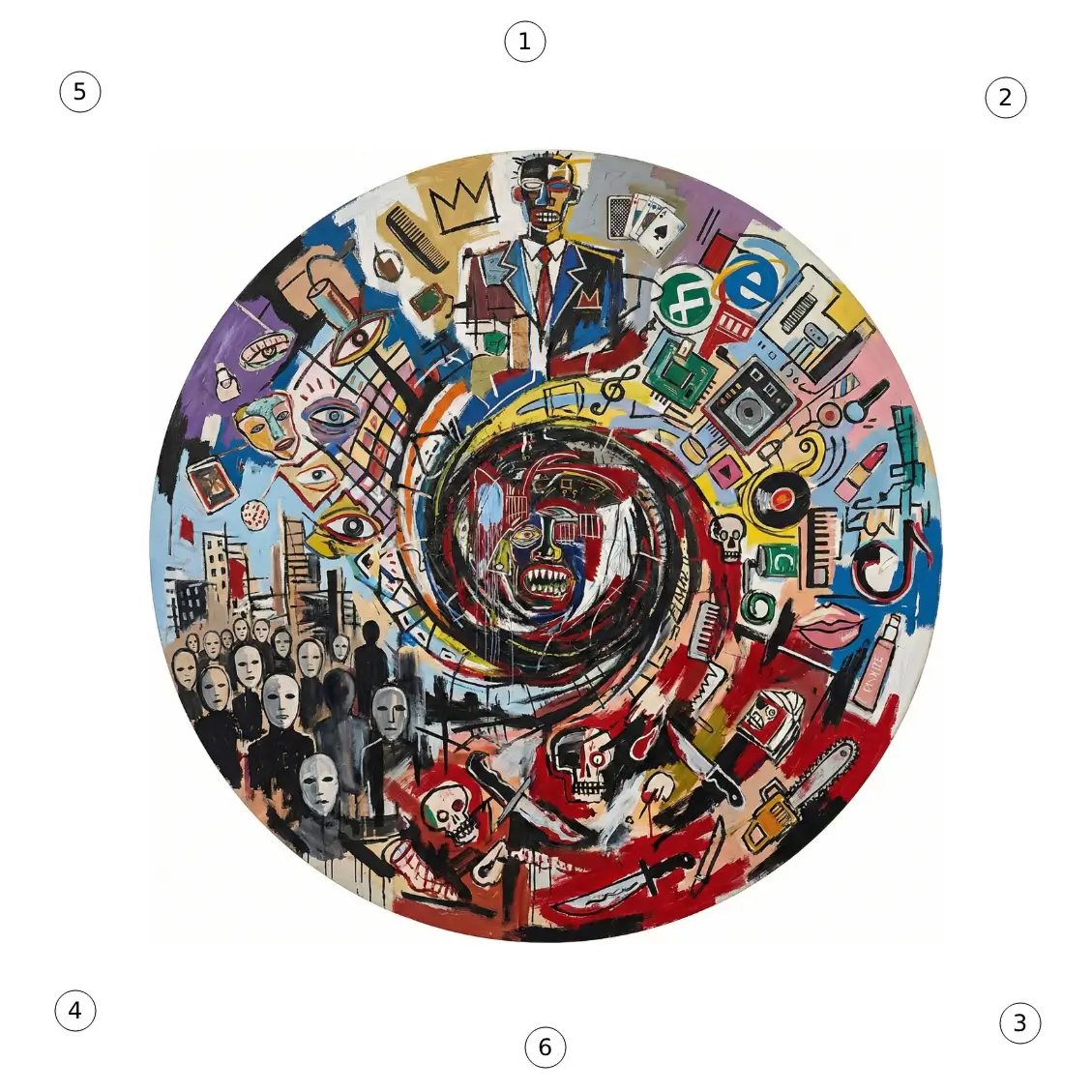
On our watch dial, sharp geometric shapes and jagged lines translate the intellectual duel with the investigator Porfiry, while the soft curves and concentric circles at the center reveal Sonia’s unconditional love.
In Summary