
And art comes to life.
Discover the stages of our creative process that make our watches so unique.
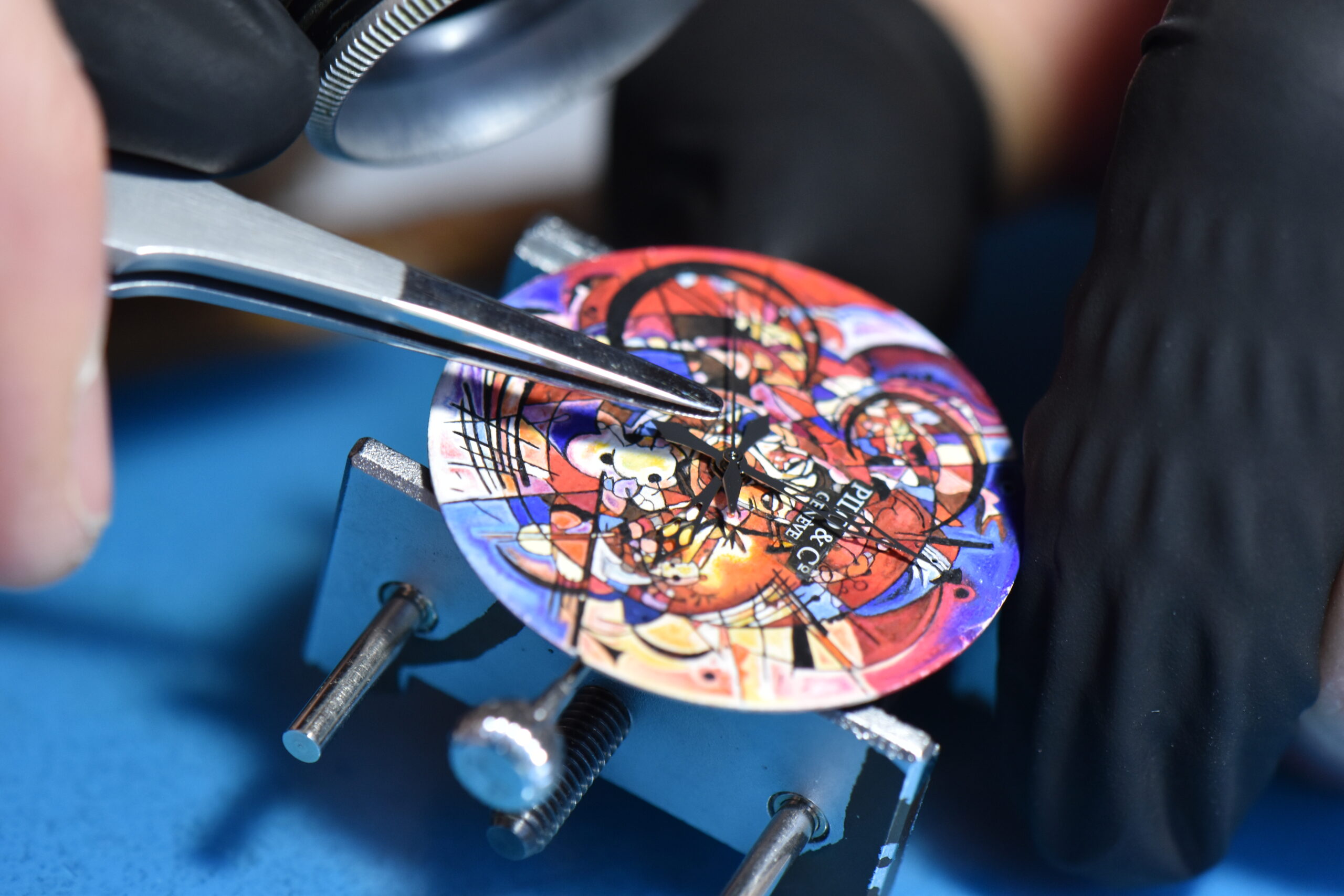
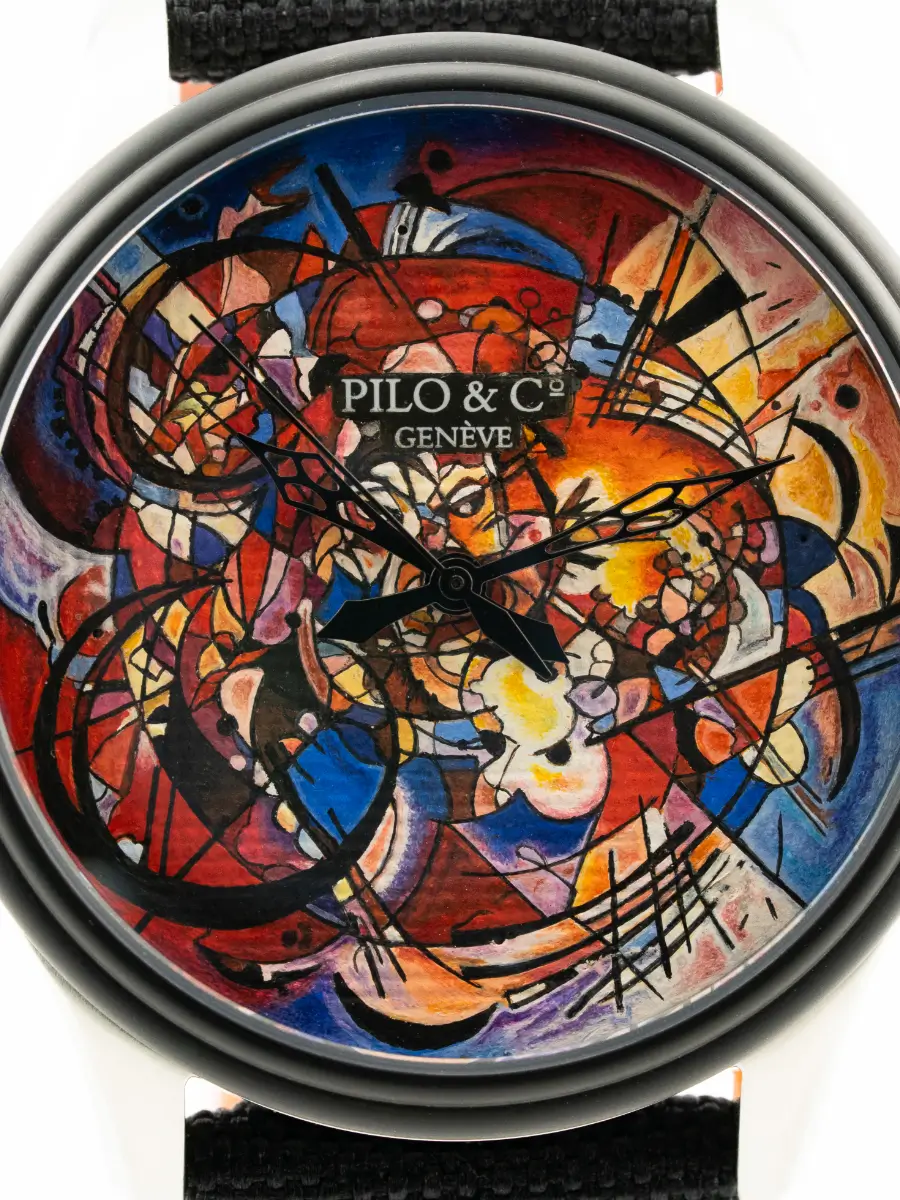
What if Wassily Kandinsky were our Art Director?
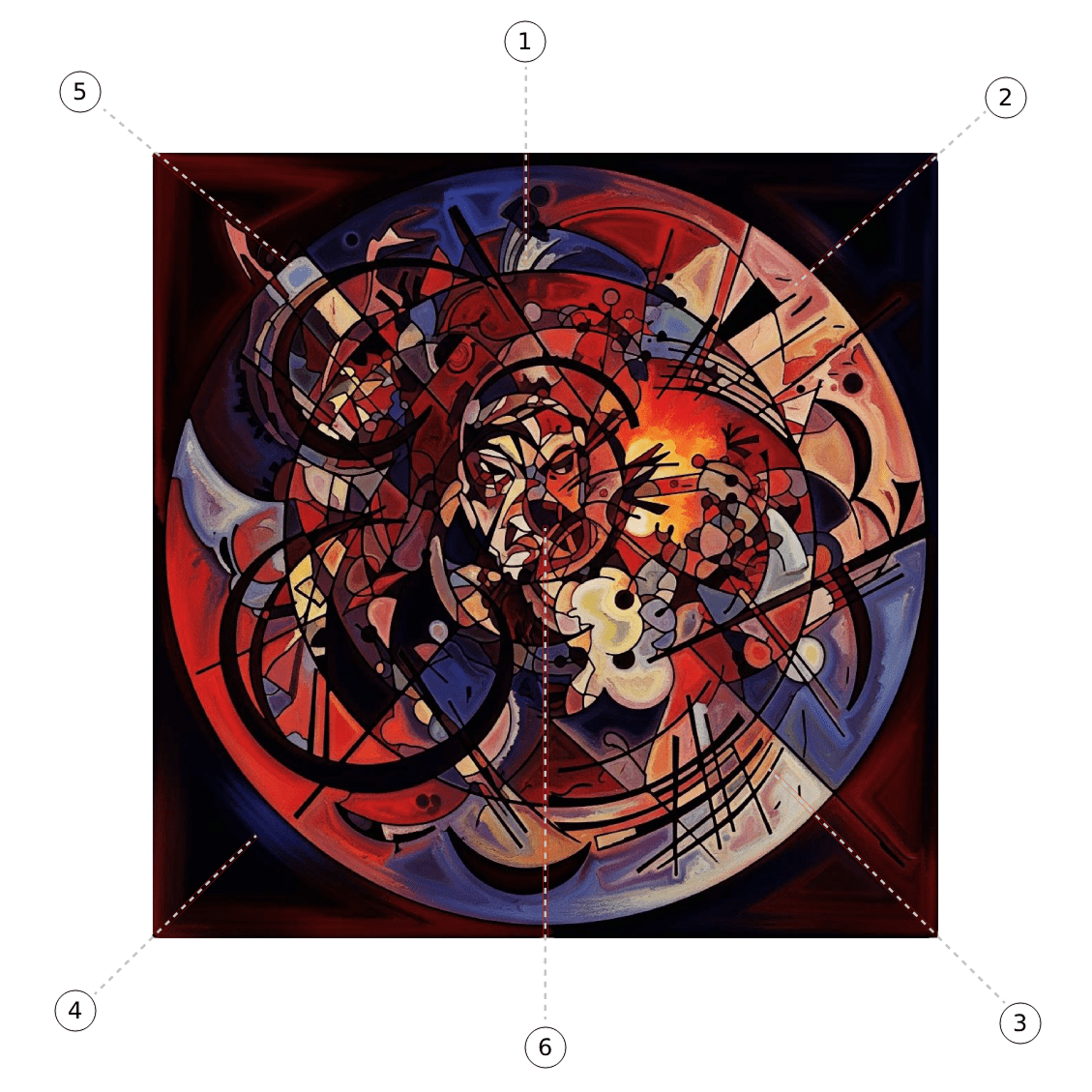
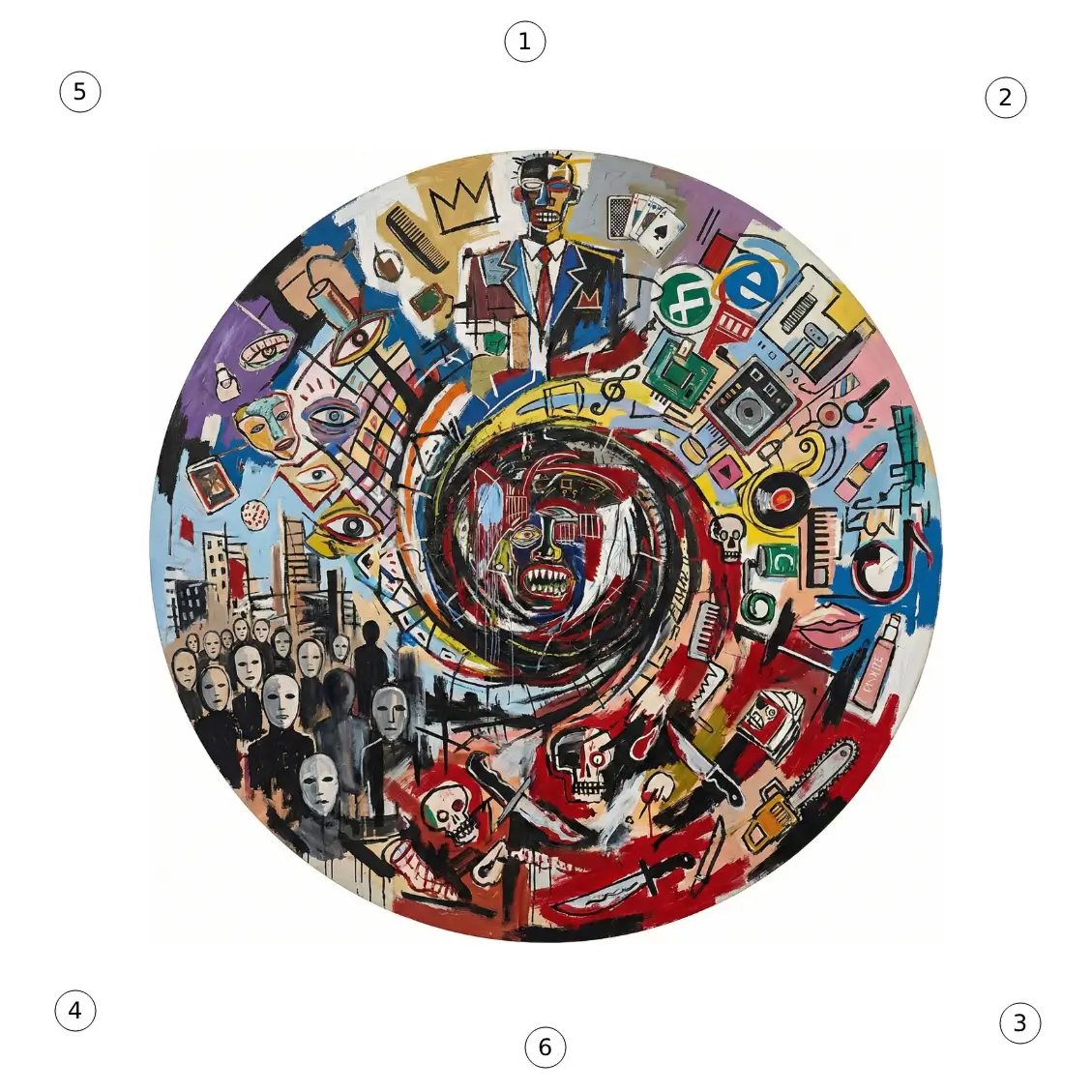
We approached our work by imagining the master of abstraction as a full-fledged member of our team. To bridge the gap left by his absence more than a century after his passing, we established a rigorous dialogue with leading art historians. From this unprecedented collaboration emerged a bold project: materializing the invisible. Drawing on his theories, we designed a system capable of transforming Dostoevsky's emotions into abstract compositions. Every shade and line becomes the visual echo of a feeling, blending historical rigor with creativity.

Black titanium: the sacred shrine of an era
Between the bezel and the case back, black titanium stands as a symbolic shrine to the souls of Dostoevsky and Kandinsky. Discovered in the Russian soil during that same era, the metal weaves a spatio-temporal veil. From zenith to nadir, this dark, sovereign element seals Raskolnikov's destiny between two eternal horizons.
Emotion in relief: Kandinsky on your wrist
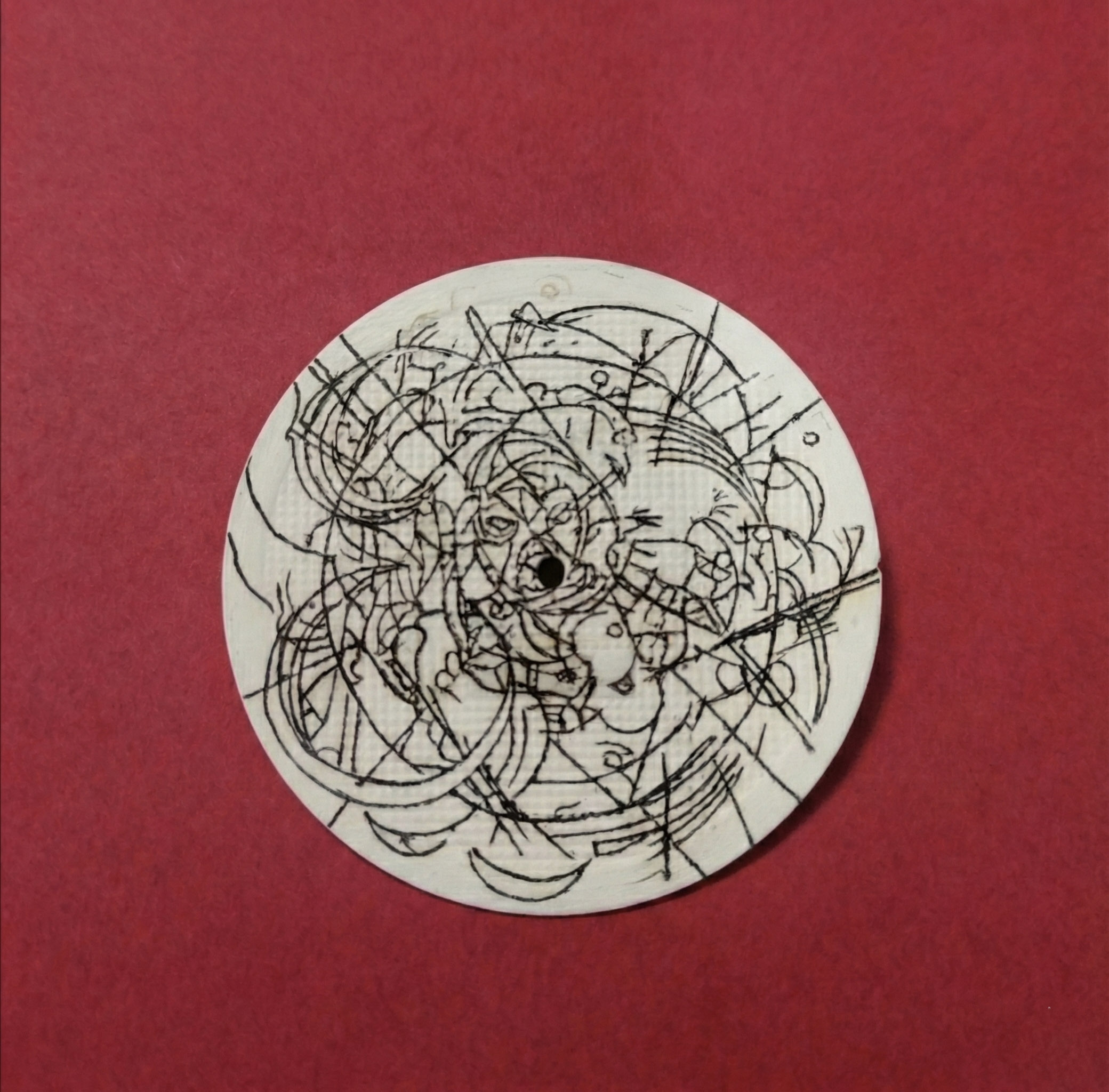
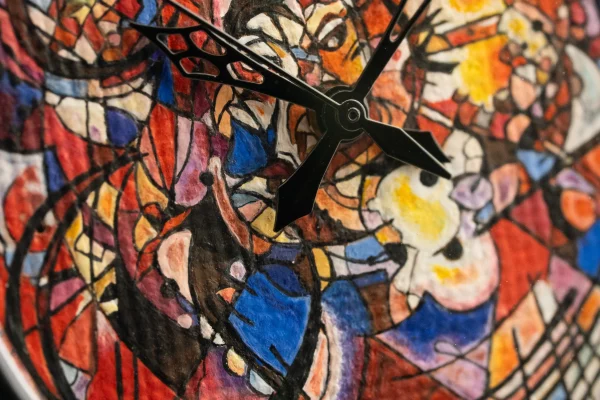
Far from the coldness of a smooth dial, our creation celebrates raw material. Here, art isn't merely meant to be looked at; it is tamed with the fingertips.
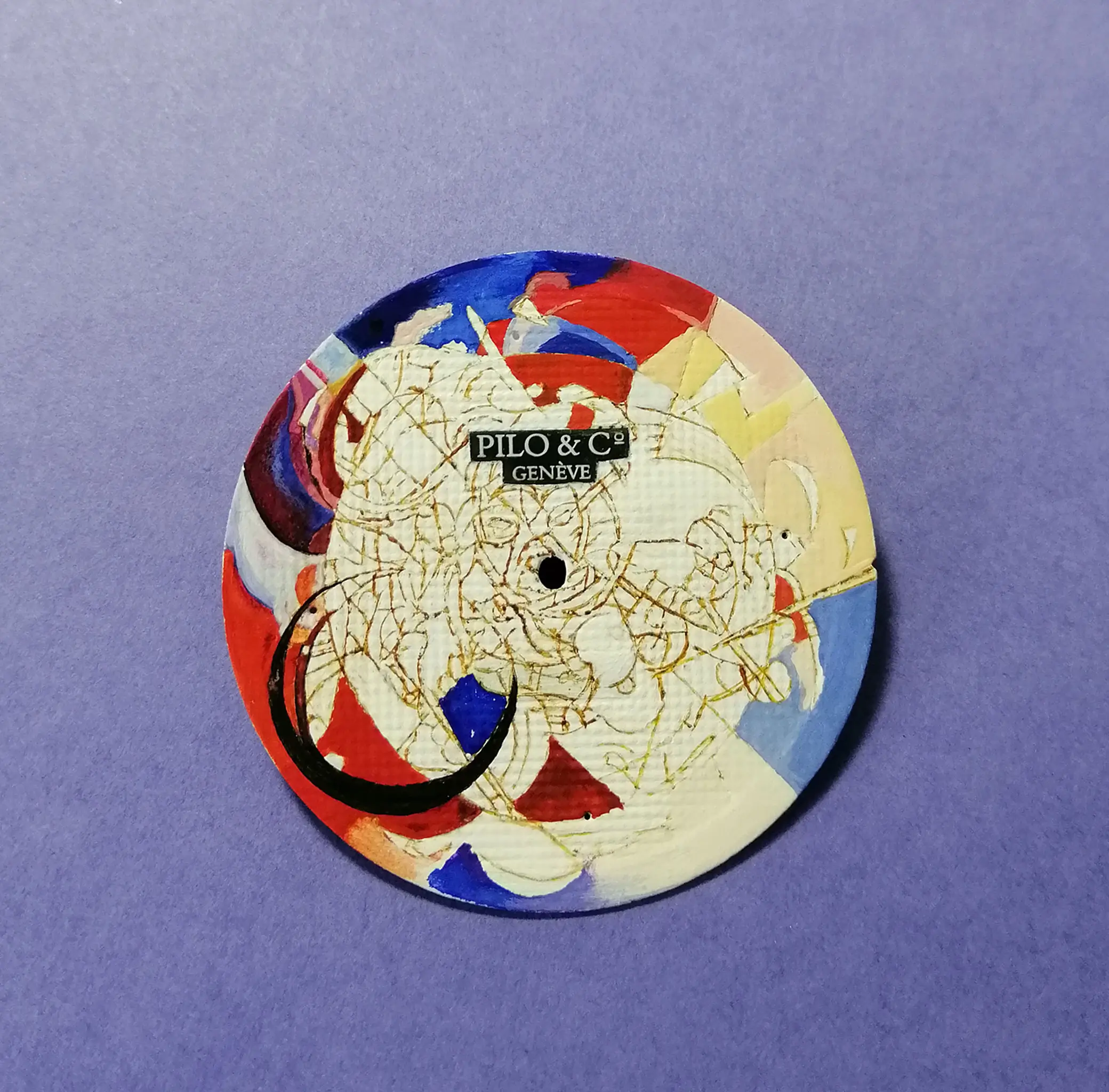
By maintaining an underlying grid structure, we give the work an unprecedented tactile depth. This relief is no accident, but a deliberate choice: much like Kandinsky, who cherished the thickness of a line, we have transformed every brushstroke into a sculpted vibration. This interplay of textures catches the light, trapping and diffusing it to awaken an extra layer of emotion: making the art not just visible, but truly alive.
Upon this geometric foundation inherited from the Bauhaus, a fascinating duality unfolds. Far from constraining inspiration, the rigor of the grid becomes the pedestal for an overflowing organic expression. It is from this tension between architectural order and impulsive relief that the beauty of the piece is born: a symbiosis where structure sublimes matter, offering a vibrant freedom to every touch of color.
To delve deeper into Kandinsky's geometric period and its relationship with watchmaking, click here to read this article.
The architecture of the invisible: Kandinsky's inner grammar
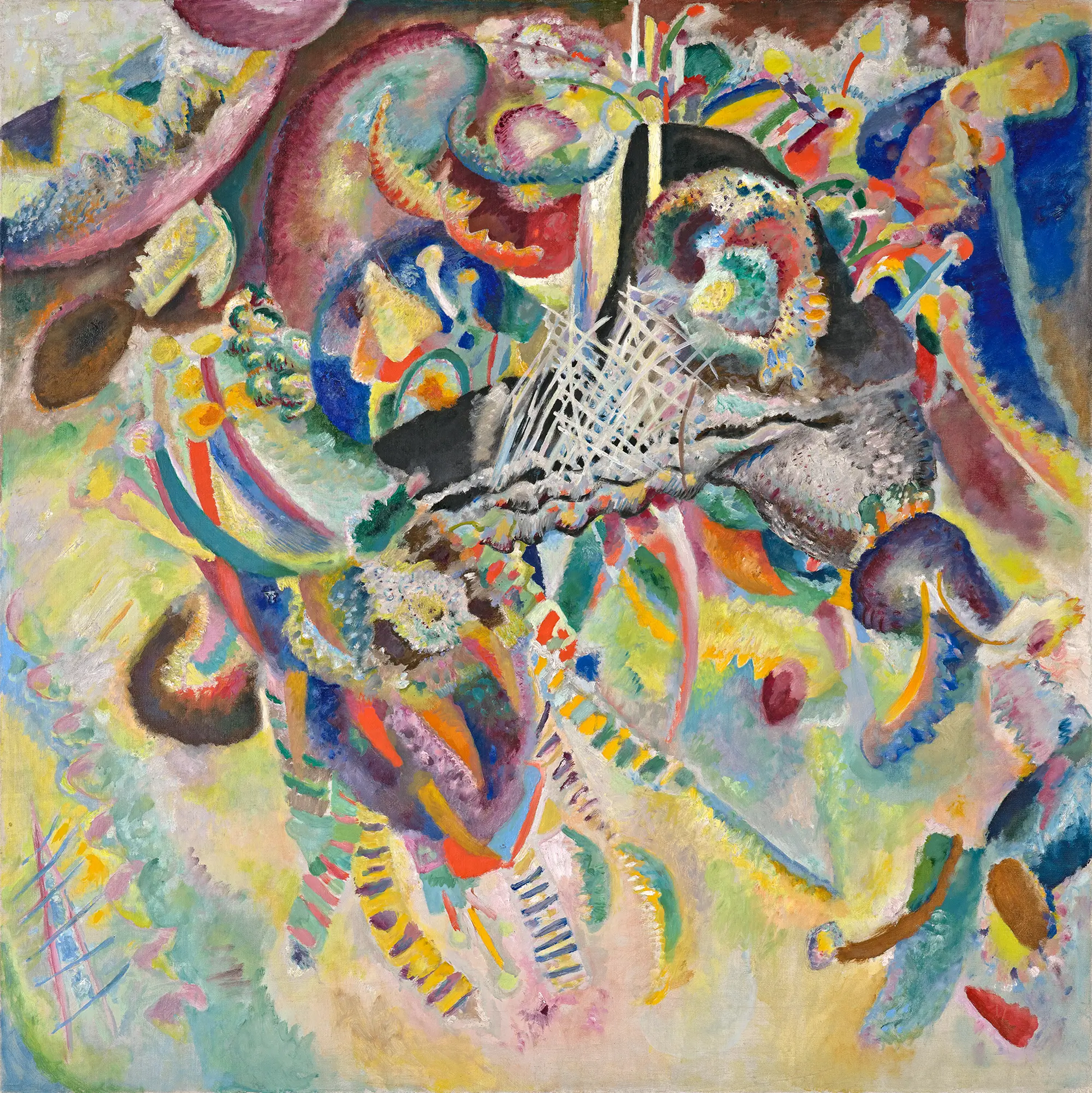
To grasp Wassily Kandinsky's creative process, one must first accept letting go of the tangible world. For the master of Der Blaue Reiter, the canvas is not a mirror held up to nature, but a vessel meant to capture what he called "inner necessity" (innere Notwendigkeit). His approach does not consist in painting an object, but in orchestrating a vibration capable of resonating with the viewer's soul.
Synesthesia as a point of departure
The genesis of Kandinsky's work is fundamentally synesthetic. Even before touching the brush, the artist "hears" his colors. For him, painting is frozen music.
In his foundational treatise, Concerning the Spiritual in Art, he formulates a now-famous pianistic metaphor that encapsulates his method:
When confronting the canvas, Kandinsky does not seek a decorative visual harmony, but a sonic precision. He composes. Yellow is not merely a sunny hue; it is, for the artist, a shrill trumpet—an eccentric color that advances toward the viewer with an energy that can verge on aggression. By contrast, celestial blue acts like a cello, a concentric force that draws the eye inward toward depth, inviting meditation and infinite cold.
The tectonics of lines and forms
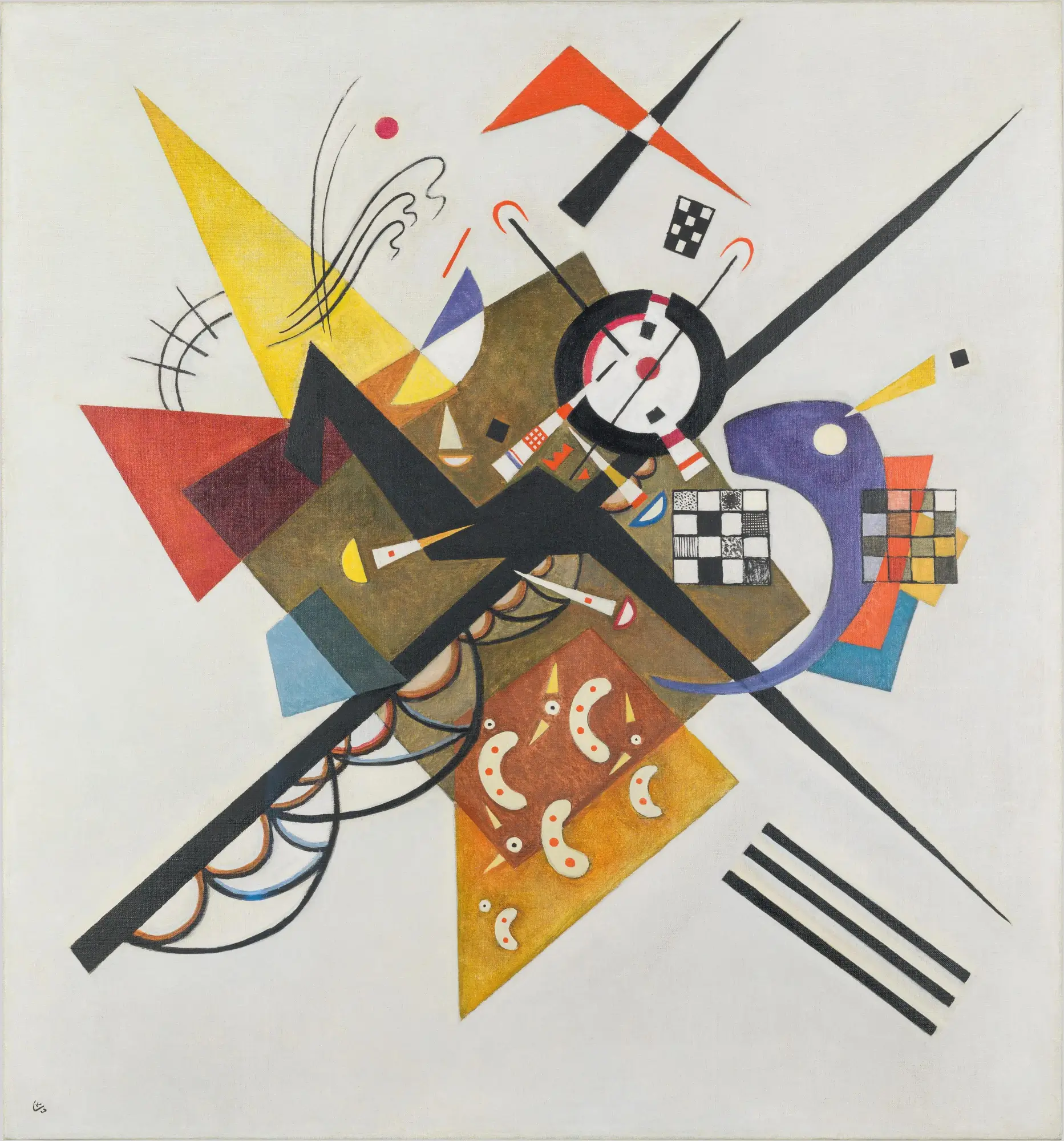
If color is raw emotion, line and form provide its intellectual and rhythmic structure. During his more geometric phase (notably at the Bauhaus), Kandinsky theorized drawing with near-scientific rigor.
The creative process involves a dynamic struggle among elements:
- The point: primordial silence, a static pause.
- The horizontal line: cold and flat, bearing the weight of the world.
- The diagonal line: introducing conflict, ascent, and dramatic tension.
In a work such as Composition VIII, one can observe how Kandinsky positions these elements not at random, but according to laws of visual weight. He creates "shocks" on the canvas. A sharp triangle (a symbol of movement and active spirituality) pierces a circle (a symbol of wholeness and calm). It is in this collision that emotion is born. He does not depict a battle; he is the battle.
Likewise, our dial does not merely recount Crime and Punishment; it conveys the work's psychological vertigo and metaphysical depth.
Execution: controlled improvisation
Although guided by intense theorization, Kandinsky's gesture left room for sudden intuition in his Improvisations. He often painted with surprising speed to capture the immediacy of emotion, layering transparent glazes to create depth, then cutting through them with firm, definitive black lines that dammed the flow of color.
To understand Kandinsky is to understand that he did not paint abstraction to escape reality, but to reach it more purely. Each canvas is a score in which color fields and force lines are arranged to bypass the intellect and strike directly at the viewer's sensibility, provoking that famous "vibration" of the soul. This abstract fusion tears through reality to open a new new dimension: a flash in which the soul of the work is revealed in absolute emotion.