2nd segment (From 12h to 3h)
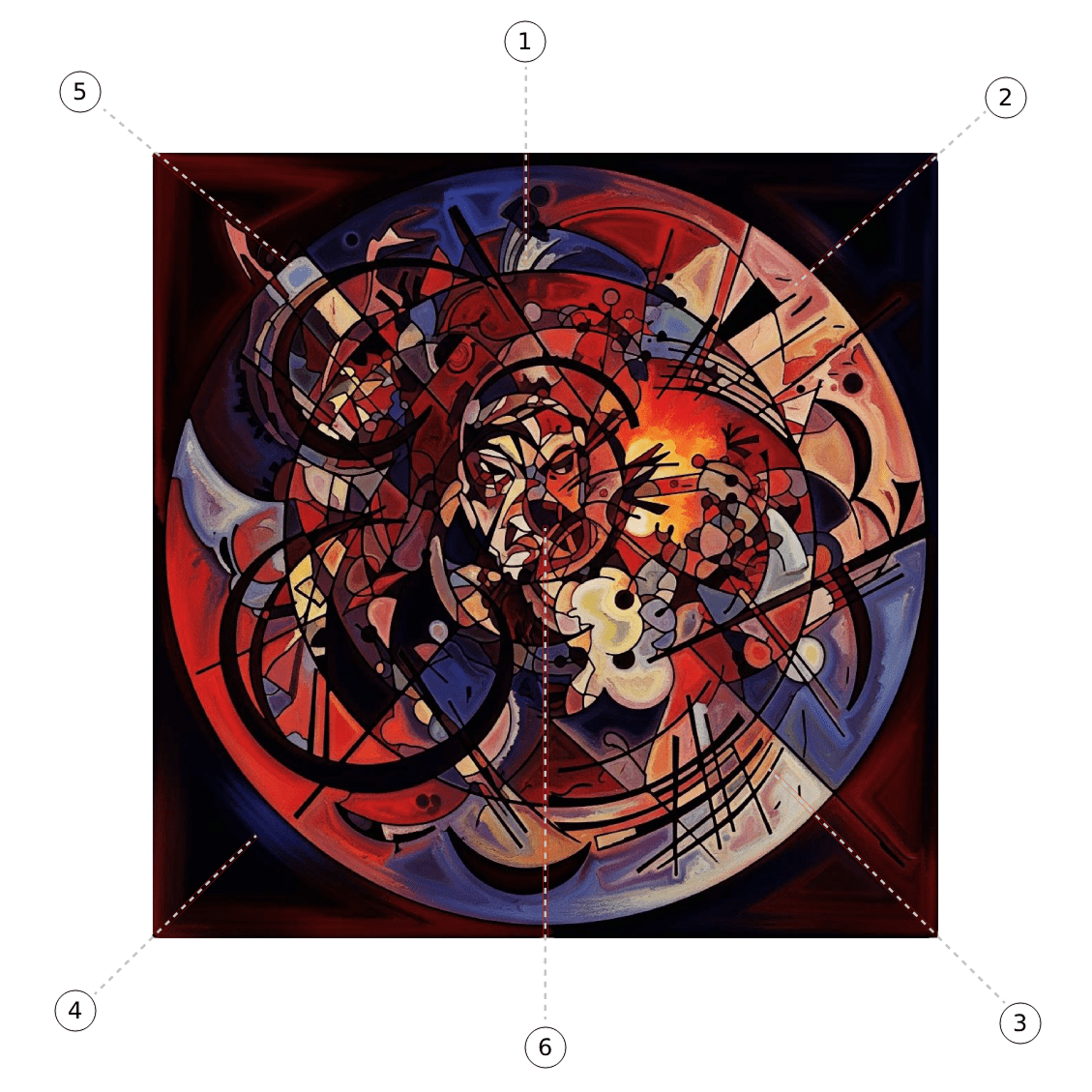
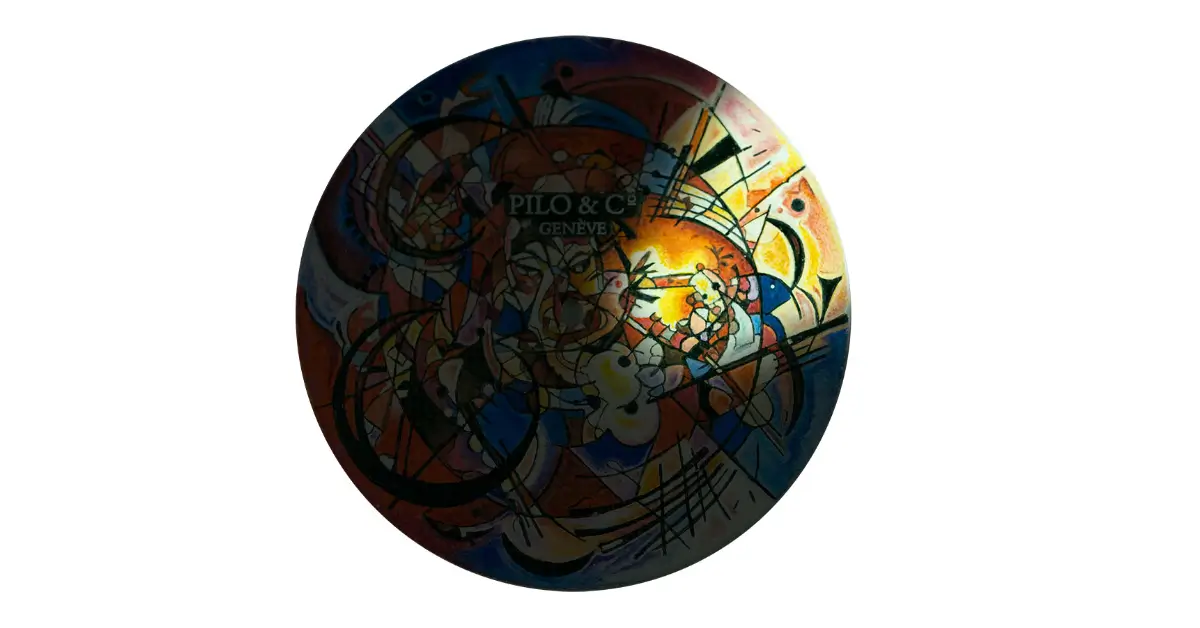
The second segment of this horological work focuses on Raskolnikov’s inner “punishment,” characterized by intense psychological turmoil, paranoia, and the dissolution of lucidity. Far removed from realistic figuration, the plastic translation of this suffering draws upon Kandinsky’s theory of dissonance, where every form and every color become the symptom of a mind in decomposition.
The disintegration of the line: between fever and fragmentation
If the first episode was marked by the cutting rigor of the axe, the second segment introduces arupture in geometric structure. The straight, authoritarian lines of nihilism give way to erratic and broken tracings, translating the protagonist’s “constant fever” and mental confusion. From a Kandinskian perspective, point and line here are subjected to contradictory forces of tension:
- Graphic instability: The use of nervous, discontinuous strokes illustrates the oscillation between madness and lucidity.
- Collapse of balance: The disappearance of right angles in favor of amoeboid or exploded forms materializes Raskolnikov’s inability to maintain order within his psyche.
Chromatism of paranoia: spiritual dissonance
Color treatment in this segment is governed by a desire to express isolation and alienation. The strident brilliance of the initial crime gives way to a more troubled and discordant palette. Pigment choices respond to the necessity of rendering a “clinical precision” of suffering :
- Invasion of dark tones: Blacks and deep violets saturate the space, symbolizing the character’s growing social and moral isolation.
- Strident contrasts: Flashes of acidic yellow or metallic blue collide with the dark masses, evoking peaks of paranoia and altered perception of reality. For Kandinsky, yellow may represent an unsettling and aggressive force; here it embodies the omnipresent anxiety gnawing at consciousness.
The dynamics of spatial oppression
The space of this segment is conceived as a visual trap. Unlike a centrifugal composition, forms here seem to converge toward an oppressive center or, conversely, flee toward the edges of the dial, translating Raskolnikov’s desire for escape and his feeling of confinement.
This spatial organization, without clear separation from the other segments, underscores the interconnection between fault and immediate punishment. The fluid transition of forms shows that mental collapse is not a static event but a dynamic and ineluctable process.
In conclusion, this second point of the dial transforms the watch into a seismograph of the soul. Through an abstract plastic vocabulary, it renders the impalpable tangible: the psychological shipwreck of an individual confronted with the irreversibility of his act. The painting does not imitate fever; it vibrates at its frequency.