The spark of an encounter :
Kandinsky & Dostoevsky
Geneva
Our artistic process
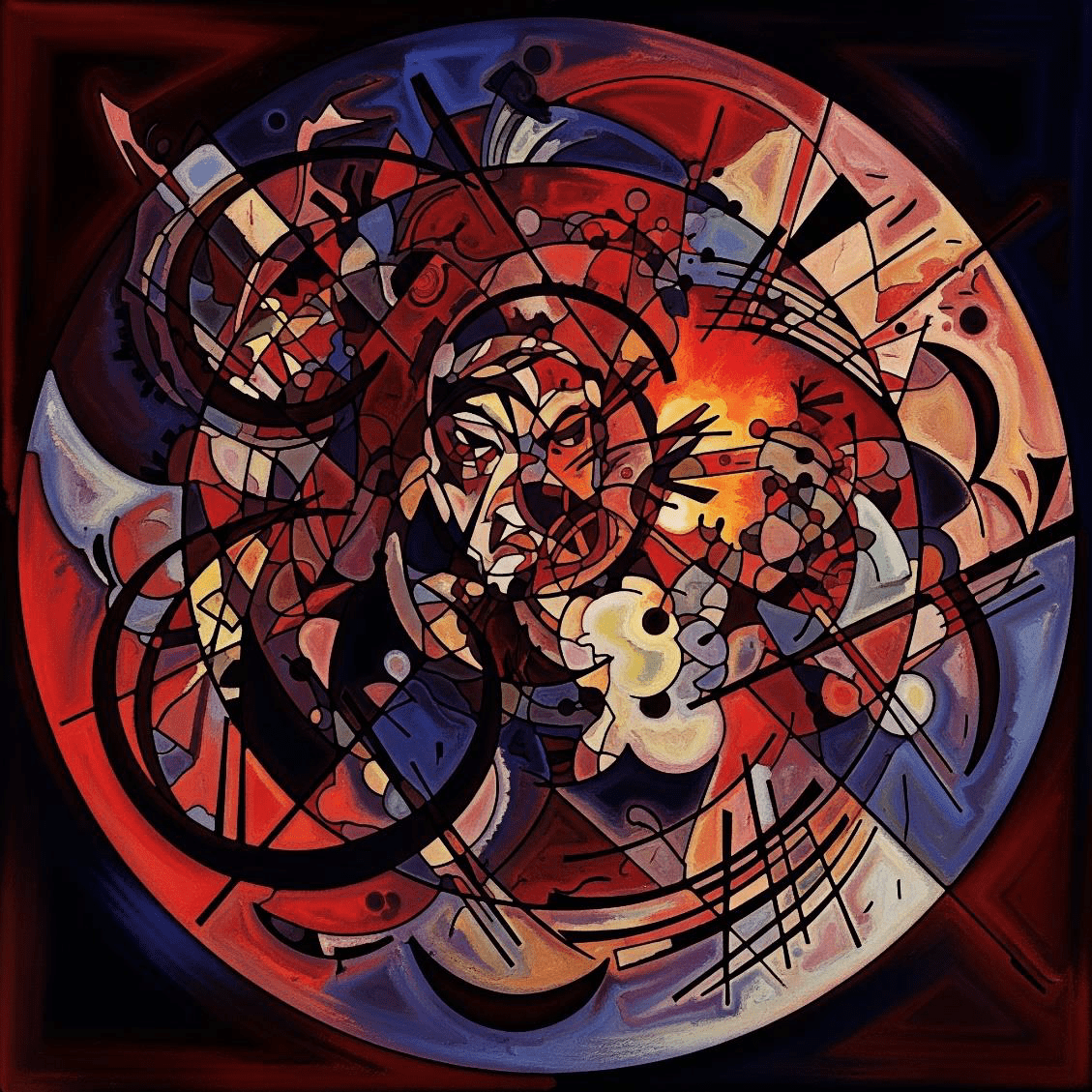
Kandinsky: The Dostoevskian resonance
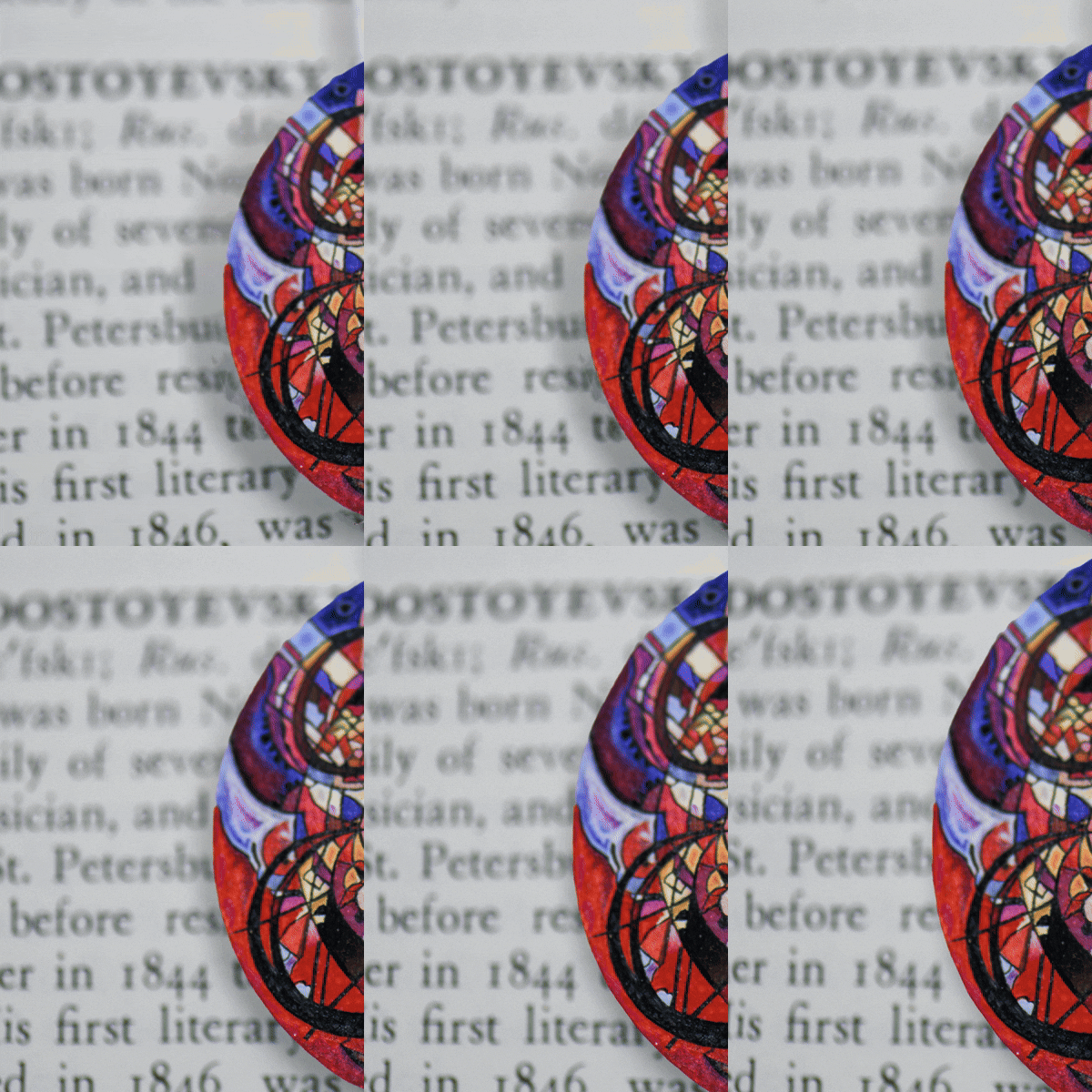
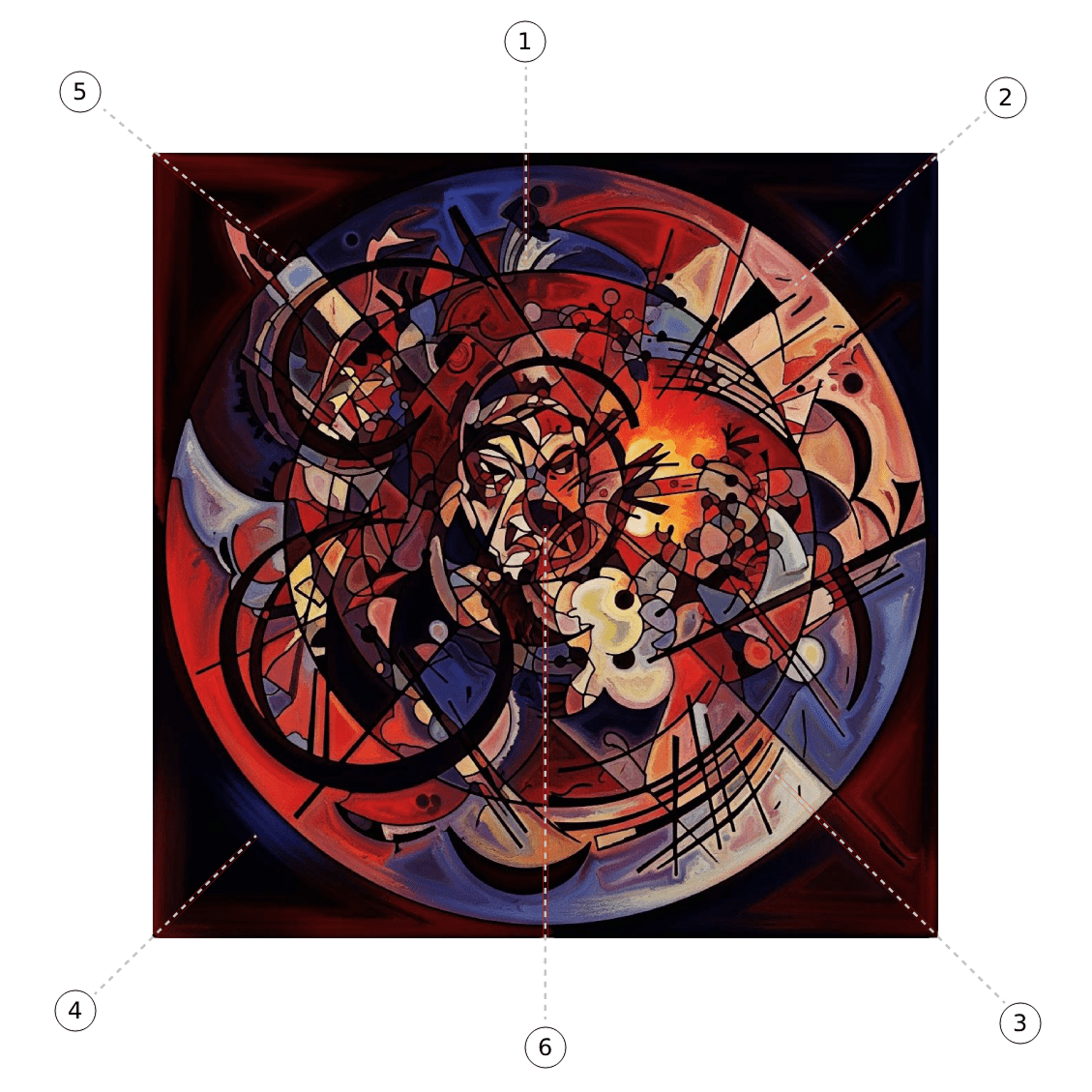
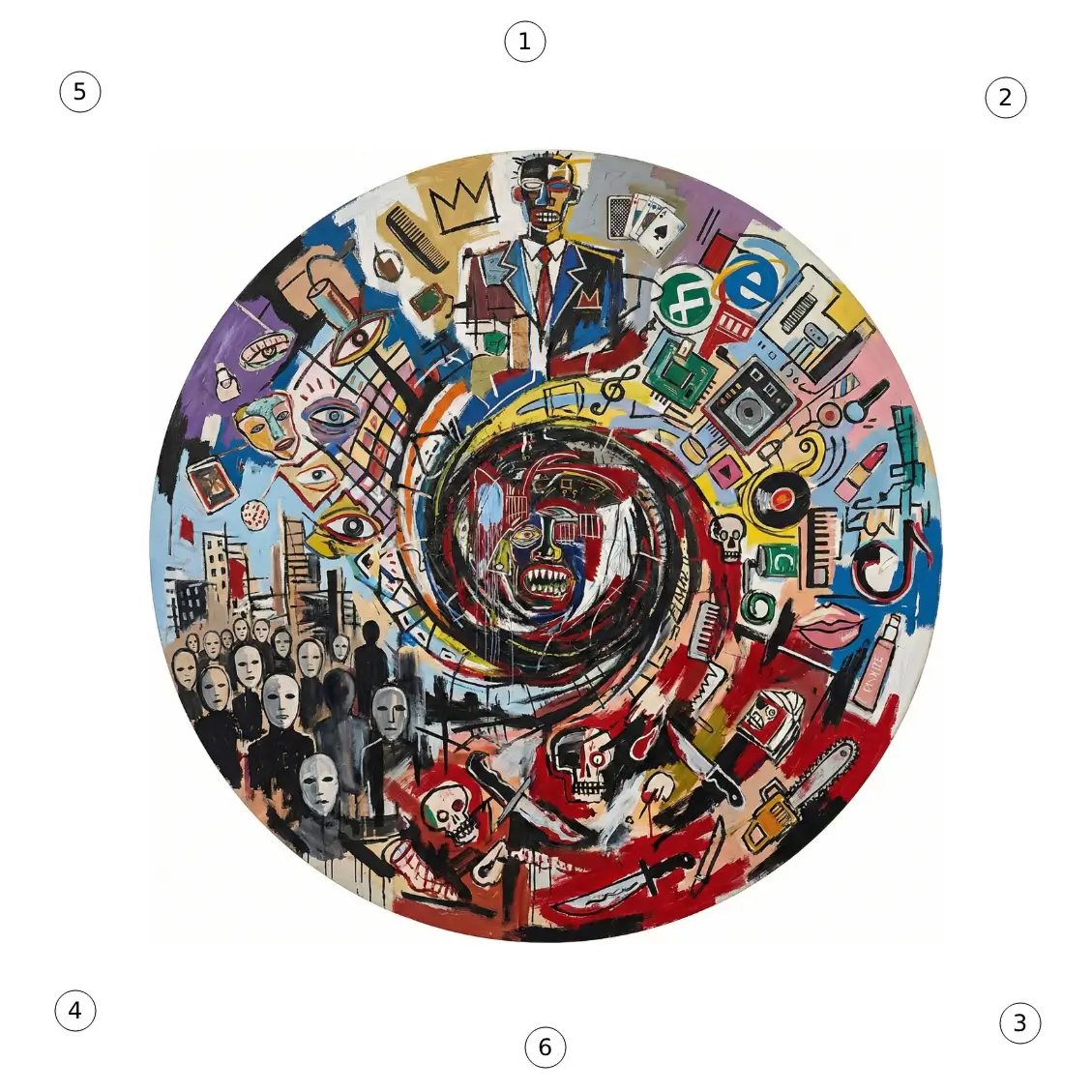
Like Kandinsky, who at the turn of the century dared to break the chains of figuration in order to paint the “vibration of the soul” rather than the object itself, we attempt here an unprecedented visual translation. Our approach, though modest when measured against the genius of the master, lays claim to a conceptual boldness yet unexplored: transposing the psychological polyphony of Crime and Punishment into Kandinsky’s abstract syntax.
If the artist transformed music into painting, we transmute text into visual tension. For this first work, the choice of Kandinsky asserted itself as an absolute necessity: only his “organized chaos” could truly embody the delirious fever and moral dissonance that inhabit Raskolnikov.
This original design is then entrusted to the meticulous craftsmanship of a miniature painter. Each dial becomes a microscopic canvas, hand-painted over 100 hours. This colossal time investment demonstrates the high standards of our approach and guarantees the authenticity of each piece. This is a unique artistic process.
The final result is a precious and singular object, a narrative frozen in matter, which stands at the pinnacle of artistic watchmaking. It is the promise of a high-value collector’s item, the signature of an original vision.
Timeline
WHEN A PAINTER
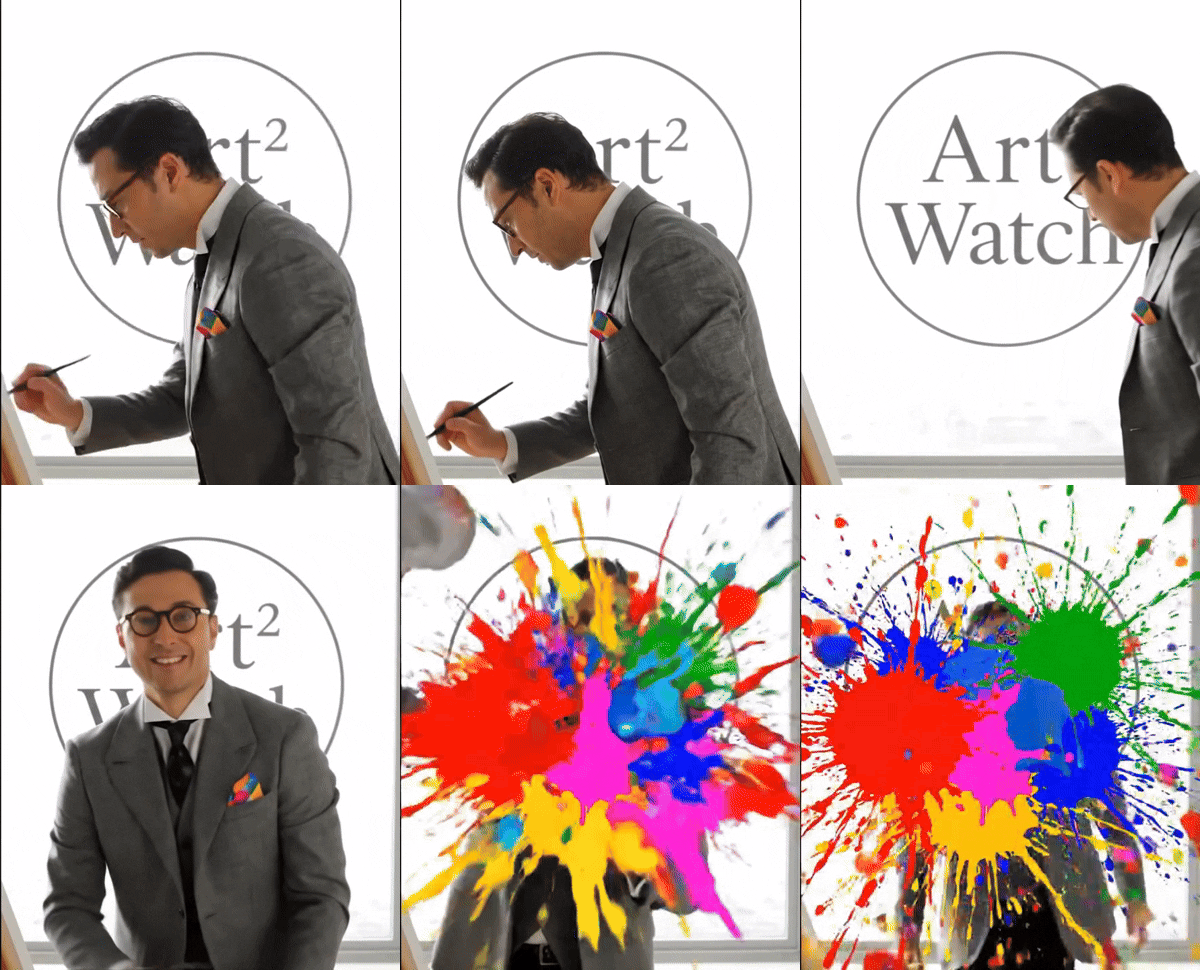
Born in Russia in 1866, Wassily Kandinsky is one of the most emblematic figures in the history of modern art. As a painter, printmaker, and theorist, he was a pioneer of abstraction in the early 20th century. Evolving within the vibrant context of European avant-gardes, particularly in Germany, he broke away from the codes of traditional representation. His approach was to free color and form from their descriptive function, exploring a purely visual and spiritual pictorial language. Kandinsky opened up a new path, a bold and decisive passage between figurative painting and lyrical abstraction. His work remains a never-ending source of inspiration.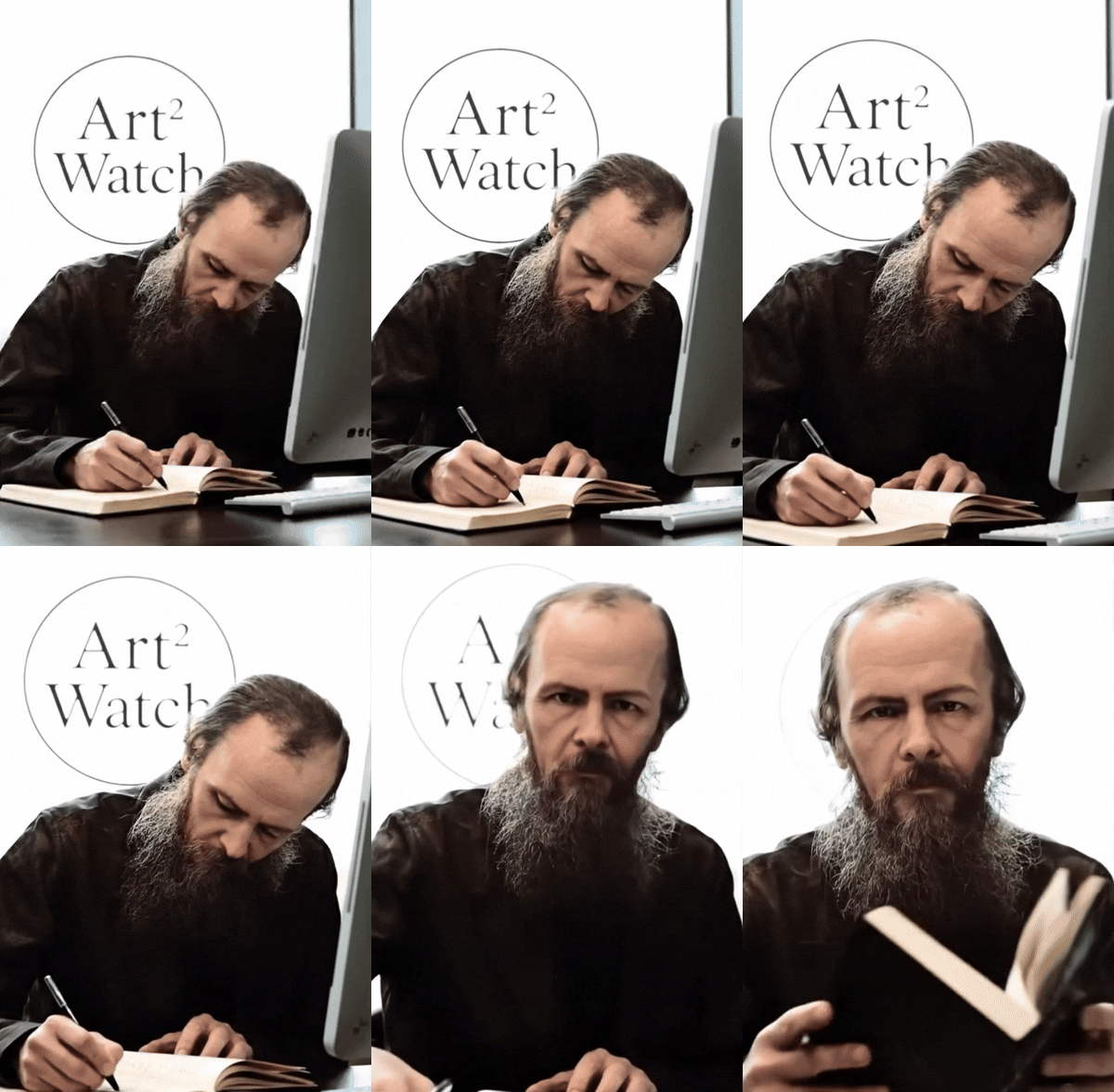
AND AN AUTHOR
Fyodor Dostoevsky, born in 1821 in Moscow, is a pillar of Russian literature. A generational gap separated them, so that part of Dostoevsky’s work had already been published by the time Kandinsky was born. His genius lies in his unprecedented exploration of the human soul. He introduced a psychological depth and moral complexity into the novel that revolutionized the genre. His stories, populated by tormented characters, examine existential dilemmas with unparalleled intensity. Nietzsche, who considered him a precursor, said of him: “He is the only psychologist, incidentally, from whom I have had anything to learn.”